
There's no standard org chart for Legal Ops. Companies of the same size or in the same industry can be structured in very different ways, since how the function is organized has a lot more to do with the operation's specific challenges than anything else.
Before making any hiring decisions, legal departments need to identify which capabilities they actually need to build. For some companies, that means starting with a single generalist. Others may need a larger team from the start, with specialists in technology, data, finance, and vendor management. The real challenge is growing the team based on the business's actual needs, not just because request volume is climbing.
The legal department's maturity level, the company's growth strategy, and its operational pain points all directly shape how the team gets built.
A Legal Ops team exists to organize the legal department so attorneys can focus their time on technical and strategic work. While the legal team handles negotiations, contracts, legal opinions, and litigation strategy, Legal Ops tracks KPIs, manages the budget, oversees vendor relationships, structures processes, and makes sure technology actually supports the department's day-to-day work. This shift has also changed the type of professionals entering the field, and expanded the range of responsibilities that now fall under a Legal Ops role.
One of the biggest questions for anyone building out a Legal Ops function is who to hire first. Is one analyst enough? Should you bring in a manager right away? Or is it better to start with someone focused on technology? The answer really comes down to which capabilities the legal department needs to build at that specific moment. Investing in a team of specialists too early can drive up costs without delivering the expected return right away. In general, a Legal Ops team grows in step with the operation's complexity.
When a Legal Ops function is just getting off the ground, it's most common to start with a generalist. This first hire typically organizes processes, maps out existing workflows, and identifies the operation's biggest bottlenecks. That initial assessment makes it much easier to figure out which skills the next few hires should bring, and helps avoid overlap with roles that already exist in the legal department.
As request volume and operational complexity grow, the team grows with it. That's usually when roles like Legal Ops coordinator and analyst come into the picture. Together, these professionals take on work like organizing data, building out KPIs, and designing workflows to handle high volumes of contracts and invoices. Splitting up these responsibilities makes the operation more organized, strengthens planning capacity, and lets the legal department run with more predictability.
As the function matures further, the team becomes more specialized. Beyond leadership, dedicated roles in legal tech, data intelligence, and financial management start joining the team. This stage often lines up with bringing on a Legal Ops manager, who coordinates across these areas and brings more consistency to the operation.
Several Legal Ops roles have become well established in the Brazilian market, each with a clearly defined scope of responsibility.
This role sits at the foundation of the function, providing direct operational support to the function's leadership. Responsibilities include mapping workflows, organizing digital files, standardizing records, and providing day-to-day administrative support.
This role focuses on managing the analyst team and making sure operational workflows run without bottlenecks. It also acts as the connective tissue between legal and the rest of the company.
Larger departments typically bring in this role for tactical and strategic leadership. This person owns the function's overall budget, corporate governance, and high-level cost audits, and aligns legal goals with senior leadership.
When the tools legal relies on need deeper customization, this role steps in. It covers implementing and integrating systems like CLM (contract lifecycle management) and document management platforms, automating workflows, and training the internal team.
This role owns the data-driven side of the strategy. It covers building dashboards, tracking case volume, forecasting future scenarios, and turning complex metrics into reports leadership can actually use to make decisions.
For departments working with a large number of outside firms and service providers, this role is essential. It covers auditing invoices, negotiating fee schedules, and continuously evaluating vendor performance.
This role runs complex projects, major system transitions, implementation timelines, and the operational risk that comes with them. It's most common at fast-growing companies.
Knowing where each role fits, and when it makes sense to bring each one onto the team, makes hiring decisions a lot clearer. Understanding local salary ranges and the core skills tied to each of these roles is also a key part of building out a Legal Ops team.
CLOC (Corporate Legal Operations Consortium), the leading global authority on Legal Ops, organizes the field around 12 core competencies. That said, these competencies don't need to be implemented all at once. The order depends on which bottleneck is putting the most pressure on the operation right now.
Most legal departments building out a Legal Ops function start with Strategic Planning and Financial Management. The first calls for someone with a strong administrative management background, capable of setting goals and aligning legal with the company's broader objectives. The second calls for professionals with a finance or accounting background, since this role is responsible for the budget, cost forecasting, invoice audits, and more. Without these two areas in place, it's hard to justify bringing on any more specialized roles down the line.
As bottlenecks shift or grow, hiring priorities shift with them. A growing number of outside vendors calls for a Vendor Manager, responsible for negotiating service agreements and holding partners accountable for efficiency. If the bottleneck is a lack of visibility into volume and performance, Data Intelligence becomes the priority, and the Legal BI Analyst takes on the job of turning numbers into actionable business intelligence. If the problem lies with the tools themselves, Legal Technology becomes the need, and the Legal Tech Specialist steps in to configure software and manage the broader legal tech stack.
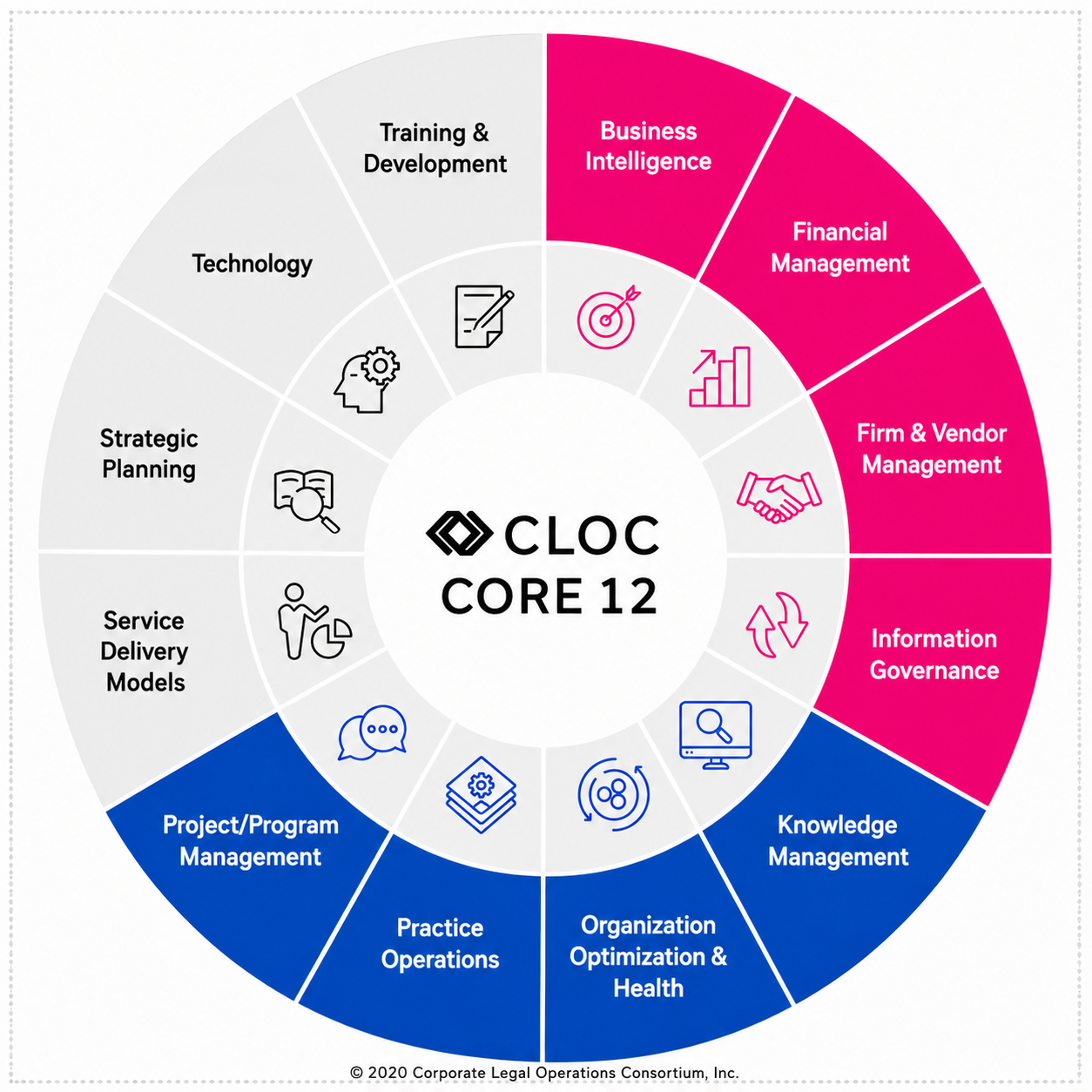
The remaining competencies tend to come into play once the more foundational bottlenecks are already resolved. Building a truly cross-functional team means looking beyond the legal field itself. Bringing in professionals from business, technology, and data, each covering the competency the operation needs most, keeps the function from growing without a clear sense of direction.
Cultural change tends to be one of the biggest challenges in building out a Legal Ops team. Legal departments used to well-established processes can push back against new workflows. A few practices can make that transition more gradual and ease that resistance.
A Legal Ops team can't operate in a silo. It's essential to build direct lines of communication with departments like IT, Finance, and HR to work collaboratively. An internal Legal Ops committee, made up of professionals at different seniority levels, helps validate decisions and gives operational changes the backing they need.
To avoid friction and confusion about the team's role, regular meetings and one-on-one conversations help the legal department understand the real value behind the changes Legal Ops is proposing.
Trying to fix every structural problem in the department at once leads to frustration. In the first few months, a Legal Ops team should focus on quick, high-impact wins. Automating the initial review of vendor invoices or rolling out e-signature tools are good examples. These initiatives immediately reduce administrative work and help build the trust needed to take on bigger projects down the line.
A Legal Ops team rarely comes together fully formed from day one. It evolves as the legal department gains predictability, starts working with data, and takes on a more strategic role within the company. Instead of growing the team every time demand increases, it's worth asking which capabilities the operation still hasn't developed. That shift in perspective tends to lead to leaner, more efficient structures that are better prepared to grow alongside the business.