Legal department management is part of the structure of any corporate legal department or law firm. It supports the organization of legal work and helps the function monitor its activities in relation to the organization's needs.
Legal responsibilities have expanded, and managing the function has become more complex. Legal work needs to keep pace with this dynamic while maintaining a clear connection to the organization's priorities. This requires a structure that provides direction for day-to-day work and supports the department's decisions.
In Brazil, this work takes place within a large-scale judicial environment. The Justice in Numbers 2026 report, published by Brazil's National Council of Justice (CNJ) recorded 40.9 million new cases in the Brazilian Judiciary in 2025, the highest volume in the historical series. At the end of that year, 75.5 million cases were pending. These figures refer to the Judiciary rather than corporate legal departments, but they help illustrate the environment in which some of these functions operate. The report brings together data from 91 courts and uses a consolidated database covering 2025.
Legal department management creates a structure for dealing with this reality. Throughout this guide, we will look at what it involves, which challenges can affect the function, how data can support decisions, and how technology can contribute to this work.
Legal department management is the structured administration of an organization's legal work. It defines how the function manages its routine, monitors its results, and makes decisions about its operations.
In practice, this means creating a framework for managing work consistently. A request needs to follow the appropriate workflow, responsibilities need to be assigned, and decisions need to be supported by the information required to make them.
This structure makes it possible to monitor the department's performance over time. Leadership can see how the work evolves, identify changes, and assess whether the way the department is organized continues to meet its needs.
Effective management gives the legal department a clear view of its own work. Leadership needs to understand how the function operates and be able to assess whether its existing structure continues to meet the department's needs.
This requires a consistent relationship between how work is performed and how it is monitored. When responsibilities, processes, and information are organized, it becomes easier to understand how the department operates and identify when a change requires attention.
The structure also needs to reflect the organization's reality. New responsibilities or changes in the nature of legal requests may require adjustments to how work is managed.
How work is distributed directly affects the team's capacity. When responsibilities are clear and processes are well defined, each professional understands their role and how a request should move forward.
When this structure is missing, the team spends time determining who should take ownership of an activity or how it should be handled. This can lead to rework, delays, and overload.
Processes should provide clarity without creating unnecessary bureaucracy. Recurring activities can follow defined workflows, while situations that require specialized analysis need room for assessment and decision-making.
This organization allows the team to focus its work on matters that require legal expertise and gives leadership a more accurate view of the department's capacity.
Not every legal request requires the same level of attention. Priorities should consider the potential impact of an issue on the company as well as the resources required to address it.
This assessment guides how team capacity and budget are allocated. A matter with greater exposure may require closer oversight or specialized expertise. When this relationship is clear, leadership can allocate resources according to the department's needs.
Cost monitoring also helps determine whether that allocation remains appropriate. Budget changes may indicate shifts in the nature of legal requests and lead to a review of priorities.
Risk and resources need to be considered together. The exposure associated with a matter can influence capacity allocation, while cost patterns can show whether that decision remains appropriate.
Data helps the department understand what is happening across the function. To be useful, it needs to be organized in a way that allows results to be compared and changes to be interpreted.
An increase in legal requests may require an assessment of available capacity. A change in costs may lead to a budget review. Data becomes useful when it helps explain what changed and what that change may mean for the department.
When data is monitored consistently, leadership can assess results with greater confidence. Metrics move beyond simply recording activity and begin to support a broader understanding of the legal function.
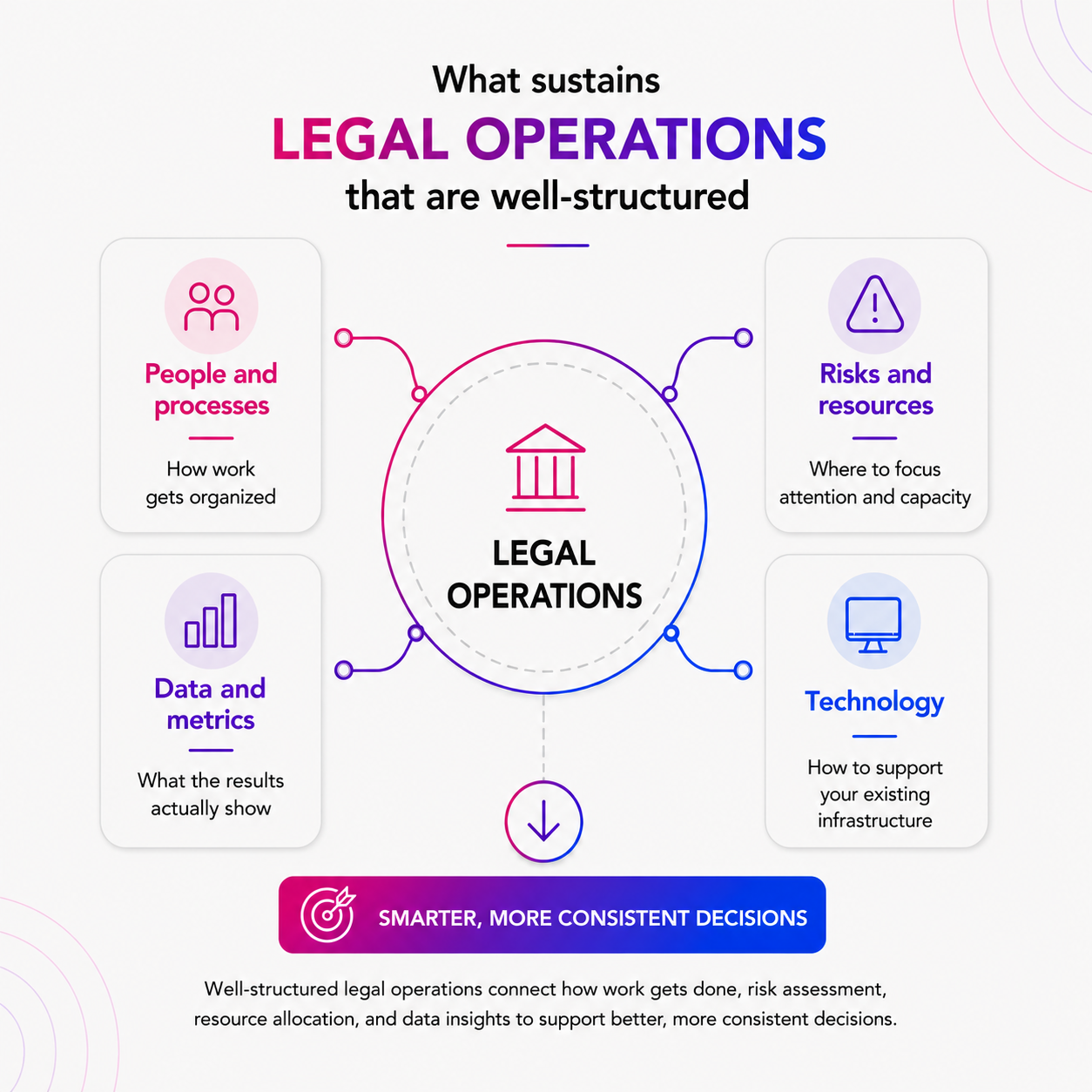
Management challenges emerge when the legal function needs to make decisions without having a sufficiently clear view of its own work. A lack of criteria for organizing requests can lead the team to respond to whatever arrives first, while scattered information makes it harder to understand what is happening.
This also affects planning. Without a consistent view of the department's activities, changes in the nature of legal requests may take longer to identify, and important decisions may be made with incomplete information.
The definition of priorities should consider the relevance of each request to the company. Deadlines matter, but they should not determine the order of service on their own.
When urgency dominates this decision, an issue that requires careful oversight may lose attention to another matter that arrives under greater pressure. The team starts reacting to incoming requests instead of working according to previously established criteria.
Clear criteria help leadership assess each request within the broader context of the department and determine where attention is needed.
This organization also supports planning. The team can respond to matters that require immediate attention while continuing to monitor issues that require ongoing treatment.
The quality of information depends on how it is organized. When department records are spread across different systems or controls, leadership may struggle to build a reliable view of the function.
This fragmentation also consumes team time. Before an analysis can be performed, information needs to be located and checked, increasing the effort required to produce a consolidated view.
The challenge becomes greater when a decision needs to be made quickly. If the data still needs to be gathered, the information may arrive after the point when it would have been most useful.
An organized structure reduces this effort and makes it easier to monitor the department. Leadership can access the information it needs and assess results with greater confidence.
Predictability in legal costs depends on understanding how expenses behave over time. A budget variation may reflect a specific event or indicate a more lasting change in the nature of legal requests.
Financial monitoring makes it possible to connect spending with the situations that influenced the result. This analysis helps explain variations and assess what may be expected in subsequent periods.
With this level of monitoring, the budget also becomes a planning tool. Leadership can assess how costs are evolving and make decisions about available resources with greater confidence.
Legal department management supports decision-making when information from day-to-day operations helps determine what needs to be done. Leadership needs to understand results, assess what has changed, and decide whether an action should be maintained or revised.
This monitoring continues after a decision is made. A change in the way work is managed can only be evaluated when its effects are observed over time.
Indicators help with this analysis. When connected to issues that matter for management, they make it possible to compare results and identify trends that require attention.
Accumulated experience also becomes valuable. The department can observe the effects of previous decisions and use that learning to inform future choices.
Technology can support legal department management when it addresses a specific need within the function. It can make work easier to monitor, reduce manual activities, and make information more accessible to those who need it.
This relationship becomes even more relevant as generative AI expands. In Brazil, the technology is already part of the routine of legal professionals and is beginning to change how certain activities are performed.
Research from FGV Direito SP, titled Generative Artificial Intelligence in Law: Opportunities and Challenges in Brazil, surveyed 495 professionals. Approximately 80% of participants reported using generative AI tools frequently, while 58% reported using them daily. Common uses included legal document analysis, review, and drafting, as well as summarization and legal research.
These findings show that the technology discussion is already connected to professional routines. The focus increasingly involves how these tools are incorporated into legal work and what conditions are needed for consistent use.
The research also identifies challenges related to training and organizational structure. The study points to the continued importance of management skills, critical thinking, communication, interpretation, and decision-making as artificial intelligence expands.
Technology adoption therefore involves decisions about how work itself is structured. Organizations need to define how a tool will be used, which responsibilities are involved, and how its results will be evaluated.
This attention is particularly important when it comes to artificial intelligence. The FGV study highlights the need for training and a clear understanding of the organizational and professional implications associated with these tools.
Technology can strengthen legal department management when it is integrated into the work and addresses a real need within the function.
Evaluating legal department management means assessing whether the department's structure is meeting the needs of its work and producing the expected results. This analysis helps identify what is working and what needs to be adjusted.
The starting point is the department's objectives. A function focused on financial predictability will have different evaluation criteria from one dealing with growing demand. What matters is connecting observed results to the priorities that guide the department's work.
Indicators support this analysis because they make it possible to monitor how the department evolves over time. An isolated metric provides limited information. When compared across different periods and considered within the department's context, it can reveal a relevant change, confirm that a strategy is working, or indicate that a decision should be reconsidered.
This analysis also makes it possible to monitor the effects of management changes. When a change produces a positive result, leadership can identify what worked and assess whether to continue it. When results fall below expectations, there is a more concrete basis for reviewing the decision.
The department's structure needs to be reassessed when its reality changes. Ongoing monitoring helps identify when processes or the way work is distributed no longer meet the department's needs.
An audit of legal processes can complement this assessment by examining in greater detail how work is being conducted. It can identify inconsistencies and opportunities for improvement that may go unnoticed during day-to-day monitoring.
A sound evaluation of legal department management helps the organization understand the function's performance, identify effective practices, and inform future decisions.
Data allows legal leadership to see how the department evolves over time. Information takes on a different meaning when it can be compared with previous periods and connected to what was happening in the department at that time.
This changes the quality of the analysis. A result may confirm that a decision worked, show that a change has not yet produced the expected effect, or reveal a trend that requires attention.
This need also appears in the international legal market. The 2025 Chief Legal Officers Survey, conducted by the Association of Corporate Counsel (ACC) surveyed 772 legal leaders across 48 countries. Seventy percent of respondents managed at least two functions beyond legal, including areas such as risk, compliance, privacy, or ethics. For 44% of respondents, advising the CEO and contributing to business strategy represented their greatest impact on the organization.
The survey was conducted in 2025 and reflects responses from that period. Its findings provide an international reference for how legal leadership was positioned at the time. They do not directly represent the reality of Brazilian legal departments in 2026.
In Brazil, the Justice in Numbers 2026 report, published by the National Council of Justice (CNJ) helps illustrate the judicial environment in which some legal departments operate. The report recorded 40.9 million new cases in the Brazilian Judiciary in 2025, the highest volume in the historical series. At the end of that year, 75.5 million cases were pending.
These figures refer to the Judiciary rather than corporate legal departments. They help illustrate the scale of Brazil's judicial environment and the importance of monitoring the department's reality through consistent information.
Managing based on data means being able to interpret these movements and understand what they mean for legal work. Information can then support decisions about priorities, resources, and performance.
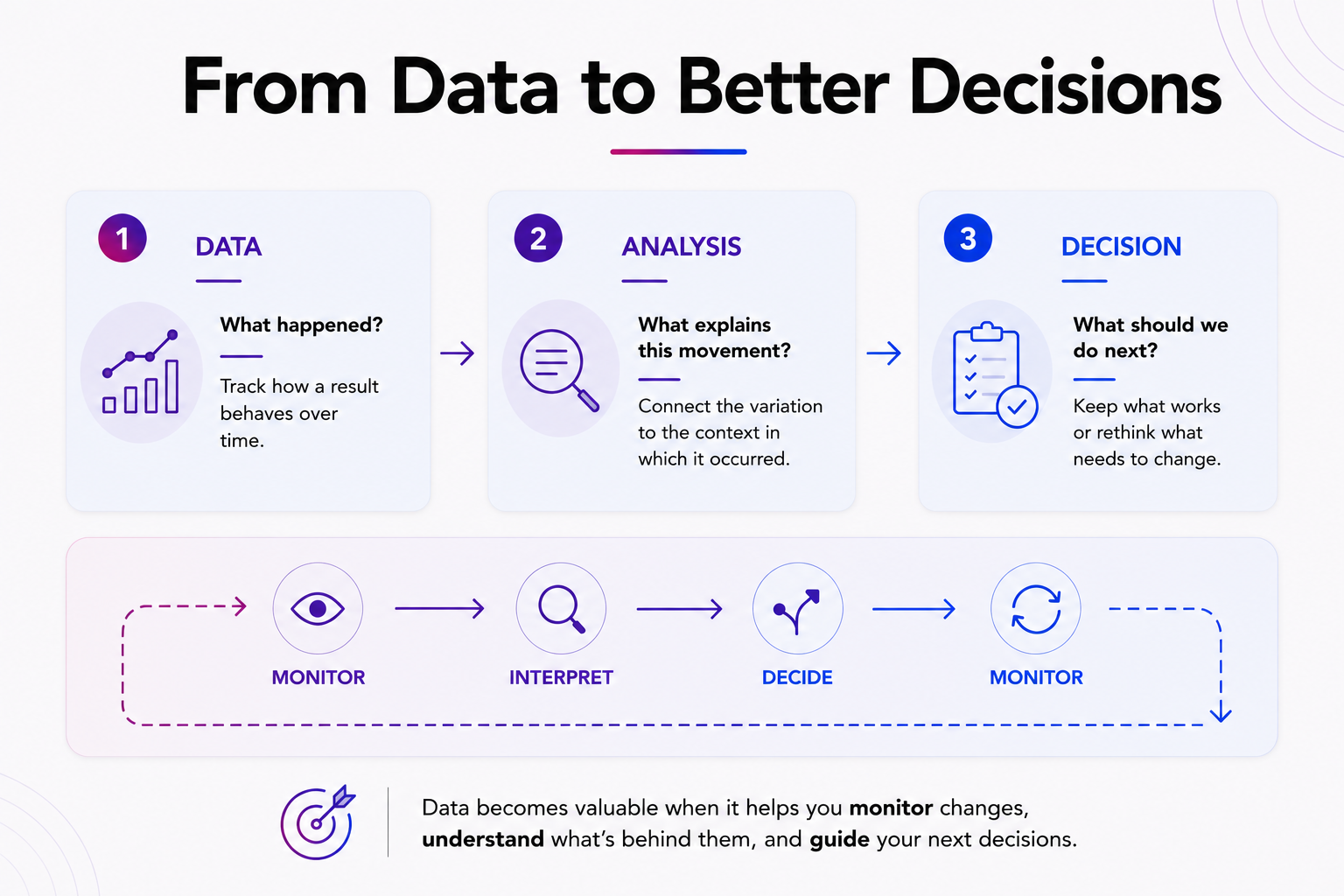
Legal department management creates value when it enables the function to understand its own performance and make more consistent decisions about its work. Organizing the department's activities creates the foundation for monitoring results and assessing what needs to be maintained or revised.
This relationship also improves predictability. Leadership has more information to identify changes, assess their effects, and prepare the department for different scenarios.
The 2025 Chief Legal Officers Survey, conducted by the Association of Corporate Counsel (ACC) illustrates this movement internationally. The survey identified a role for legal leadership that extends into other functions within organizations. Seventy percent of respondents managed at least two additional functions, while 44% identified advising the CEO and contributing to business strategy as their greatest impact.
In Brazil, the environment in which legal work takes place also requires strong monitoring and analytical capabilities. The Justice in Numbers 2026 report from the National Council of Justice recorded 40.9 million new cases in the Brazilian Judiciary in 2025. Research from FGV Direito SP on generative artificial intelligence in law also shows the presence of these tools among legal professionals in Brazil.
These findings describe different contexts. The ACC survey provides an international reference for the role of legal leadership. The CNJ report helps contextualize Brazil's judicial environment. The FGV research shows a technological shift already present in the country's legal profession.
Consistent management allows the legal department to better understand its results and explain its decisions. The function can identify what works, review what needs to change, and participate in business decisions with a more grounded understanding of its own performance.
Legal department management structures how work is conducted and creates the conditions for leadership to monitor results. Its effectiveness depends on the ability to adapt the structure to the department's reality and the organization's needs.
Over time, processes may need to be reviewed, priorities may change, and new technologies may alter how certain activities are performed. Monitoring results helps identify these changes and assess which decisions need to be revisited.
Data strengthens this analytical capacity. Indicators help explain how the department is performing, while organized information supports leadership decisions. Technology can contribute when it addresses concrete needs and is integrated into the department's way of working.
Legal department management needs to be treated as an ongoing activity. The function monitors its reality, evaluates its results, and adjusts its structure as its needs change.
Legal department management is the structured administration of an organization's legal work. It defines how the function manages its routine, monitors results, and makes decisions about its operations.
Legal department management is important because it organizes the work and establishes criteria for monitoring the department's performance. With an appropriate structure, leadership can assess results and make decisions with greater consistency.
Effective legal department management connects the organization's day-to-day work with leadership decisions. Clear processes and reliable information help the department monitor its activities and assess when its structure needs to be adjusted.
Improving legal department management requires understanding how work is being conducted and where opportunities for improvement exist. Based on this assessment, leadership can adjust processes, priorities, and monitoring practices.
Technology can support legal department management when it addresses a concrete need within the function. It can make information easier to access and reduce manual activities when it is integrated into the department's processes and way of working.