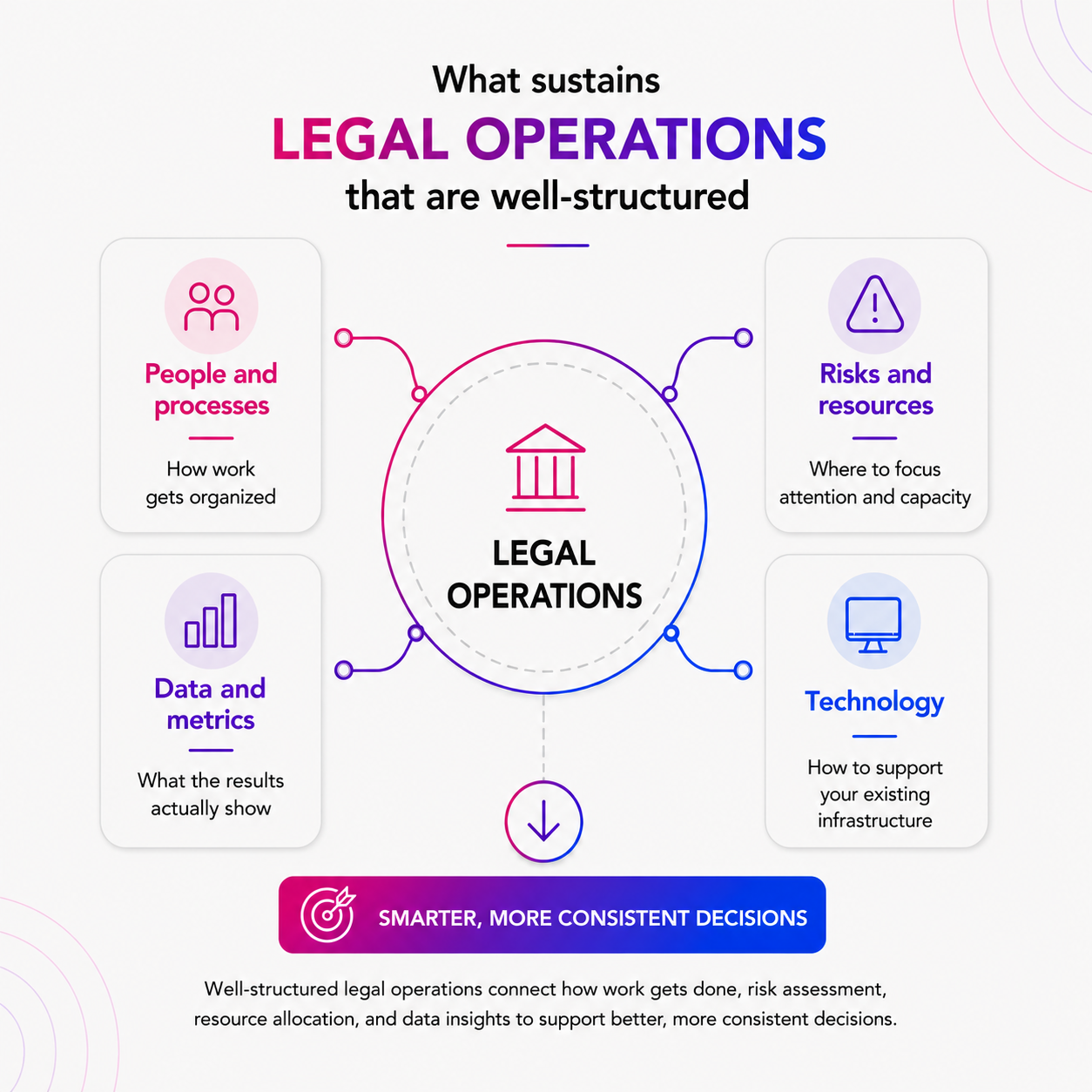
Legal department management provides the structure an in-house legal team needs to organize its work and align its activities with the organization’s priorities.
As the role of the legal function has expanded, managing the department has become more complex. Legal teams need to respond to changing demands while maintaining a clear connection to the needs of the business. That requires an operating structure that gives direction to day-to-day work and supports sound decisions.
In Brazil, legal teams operate in a judicial environment of significant scale. The Justice in Numbers 2026 report from Brazil’s National Council of Justice (CNJ) recorded 40.9 million new cases in the Brazilian judiciary in 2025, the highest volume in the historical series. At the end of that year, 75.5 million cases remained pending. These figures refer to the Brazilian judiciary rather than corporate legal departments, but they help illustrate the scale of the environment in which many legal teams operate. The report covers data from 91 courts based on consolidated 2025 figures.
A structured management approach gives the legal function a way to navigate this reality. This guide examines what effective legal department management involves, the challenges that can undermine the function, how data supports decision-making, and how technology can contribute to the work.
Legal department management is the structured management of an organization’s legal work. It establishes how the function handles its day-to-day operations, tracks performance, and makes decisions about its work.
In practice, this means creating a clear operating model for the work. A matter needs an appropriate workflow, responsibilities need to be assigned, and decisions need to be supported by the information required to make them.
This structure makes it possible to track the department’s performance over time. Legal leaders can see how the work is evolving, identify changes, and assess whether the way the function operates continues to meet its needs.
The structure of an in-house legal department will vary according to the size and needs of the organization. Different business models, levels of complexity, and areas of responsibility create different management requirements. The operating model needs to reflect the work the team is actually responsible for.
A well-structured legal function connects day-to-day work with organizational priorities. When leaders can see how work is distributed and what results the department is delivering, they have a stronger basis for evaluating choices and allocating resources.
Effective management starts with understanding how the work actually gets done. Leaders need enough visibility into day-to-day operations to assess how the function is working and where its structure could be improved.
That visibility creates a connection between how work is performed and the results being observed. It gives the department a basis for tracking performance and assessing whether decisions are having the intended effect.
The operating model also needs to keep pace with changes within the legal function. Shifts in workload, responsibilities, or business priorities may require adjustments to how the work is organized.
How work is distributed directly affects team capacity. When responsibilities are clear and processes are well defined, each professional understands their role and how a matter should move forward.
Without that structure, part of the team’s time gets consumed by managing the workflow itself. A matter reaches the wrong person, an activity has to be sent back for review, or a decision stalls while the team determines who owns it.
Processes should provide clarity without creating unnecessary bureaucracy. Recurring activities can follow established workflows, while matters that require specialized analysis need room for assessment and judgment.
This gives legal leaders a clearer view of team capacity and helps them recognize when changes in the volume or nature of the work require adjustments to the operating model.
Legal matters do not all have the same impact on the organization. A matter involving significant exposure requires a different level of attention from one that follows a simpler workflow.
Prioritization should reflect those differences. When leaders consider the significance of each matter alongside available capacity, they can direct resources toward the issues that warrant greater attention.
The same principle applies to financial resources. Tracking the legal budget helps the department understand how resources are being used and what is driving changes in spending over time.
Costs become more meaningful when they are connected to the situations that generate them. Changes in the nature of legal demand can affect spending and shift how resources need to be allocated.
Risk and resources should be evaluated together. Capacity allocation needs to reflect the level of exposure the department is managing, while cost trends help determine whether that allocation remains appropriate.
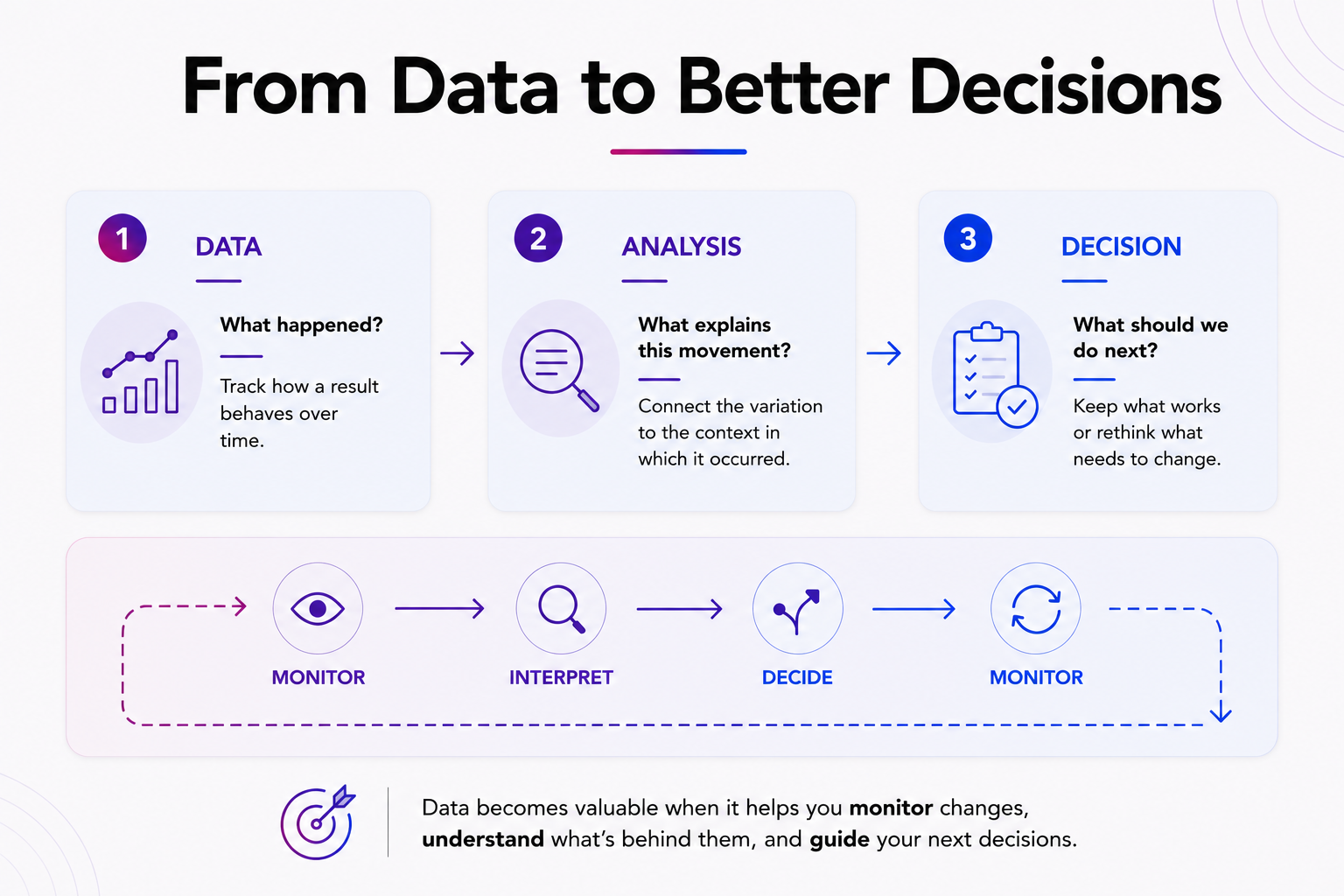
Data helps legal teams understand what is happening across the function over time. To be useful, information needs to be organized so results can be compared and changes can be evaluated in the context in which they occurred.
An increase in matter volume may signal a different capacity requirement. A change in costs may prompt a budget review. A result that falls above or below expectations can also provide information for evaluating a decision that has already been made.
Data becomes valuable when it helps the department track these changes and understand their effects. With consistent information over time, legal leaders can identify trends, evaluate results, and determine whether a strategy should continue or be reconsidered.
Management challenges emerge when the legal function has to make decisions without enough visibility into how its work is actually operating. Without clear criteria for organizing matters, teams may end up responding to whatever arrives first, while fragmented information makes it harder to understand what is happening across the function.
This also affects planning. Without a consistent view of day-to-day operations, changes in the nature of legal demand may take longer to identify, and important decisions may be made with incomplete information.
Three situations illustrate how these challenges appear in practice.
Prioritization should reflect the significance of each matter to the organization. Deadlines matter, but they should not determine the order of work on their own.
When urgency dominates prioritization, an issue that requires careful attention can lose ground to another matter that arrives under greater pressure. The team becomes reactive to incoming requests instead of working from established criteria.
Clear criteria give legal leaders a way to evaluate each matter in the context of the broader function. This makes it easier to focus effort where it is most needed while preserving capacity for matters that require ongoing attention.
Clear priorities also support planning. The team can respond to immediate demands without losing sight of matters that have greater potential impact on the organization.
The quality of information depends on how it is organized. When department records are spread across different systems and tracking tools, it becomes harder to build a reliable view of the work and understand what is happening day to day.
Fragmentation also affects execution. Information has to be located, checked, and brought together before it can be used. That consumes time and increases the risk of inconsistencies. The team loses some of the visibility it needs to handle matters with confidence.
The problem becomes more significant when a decision needs to be made quickly. If data still has to be gathered and consolidated, the information may arrive after the point when it would have been most useful, both for the person handling the work and for the person making the decision.
A well-organized information structure makes data easier to access and gives the team greater visibility into its work. The team can track matters more clearly, while legal leaders have a more reliable basis for evaluating performance and making decisions.
Cost predictability depends on understanding how legal expenses behave over time. A single period shows what was spent, but it does not indicate whether that result reflects a recurring pattern or a one-time event.
Comparing periods helps distinguish between the two. A sustained change in costs calls for a different assessment than an extraordinary expense, particularly when a shift in the nature of legal demand explains the change.
This understanding strengthens budget planning. By identifying relevant patterns and changes, the legal department can work with more reliable projections and make adjustments before cost changes affect the planned budget.
Financial predictability therefore becomes part of the department’s management approach. The budget moves beyond recording past expenses and becomes a tool for planning future periods.
Legal management needs to translate decisions into changes in how work gets done. When the department identifies a meaningful change, the response may involve how matters are assigned, how a workflow is organized, or how capacity is allocated to a particular activity. A decision creates value when it reaches the operation and changes how work is performed.
The relationship also works in the other direction. What happens in day-to-day operations shows whether a decision was appropriate. Recurring difficulties, changes in workload, or results that differ from expectations provide evidence for reassessing how the function is organized.
Metrics add consistency to this process. When they reveal a sustained change, they help determine whether the issue is isolated or requires intervention. When results develop as expected, they also provide evidence that a particular decision is working.
Decision-making is strengthened by this connection between management and operations. Leaders set direction based on the needs of the function, while the team’s day-to-day experience provides the operational feedback needed to assess those choices.
The result is a management approach that directly influences the quality of legal operations. Decisions move beyond planning and begin to shape how work is performed every day.
Technology creates value for legal management when it improves how work is performed and monitored. Choosing a tool should start with a specific need within the function and consider how the technology will fit into the existing workflow.
Generative AI makes this especially relevant. Its use is already part of legal practice in Brazil, including activities directly connected to day-to-day legal work. For legal management, this creates a need to define how these tools will be used, which activities they will affect, and how their outputs will be reviewed.
The Generative AI in Law: Opportunities and Challenges in Brazil study from FGV Direito SP conducted by the Center for Teaching and Research in Innovation at Fundação Getulio Vargas Direito SP surveyed 495 legal professionals. Approximately 80% of participants said they use generative AI tools frequently, and 58% reported using them daily. The most common applications included analyzing, reviewing, and drafting legal documents, as well as producing summaries and conducting legal research.
These figures show that generative AI is already part of professional workflows. For legal management, that means incorporating a new technology into the way work is organized while considering its impact on processes, responsibilities, and team capacity.
The study also points to uneven levels of organizational readiness. The report identifies challenges involving training and AI literacy for legal professionals, along with organizational and cultural factors. Among respondents, 43.5% said they review AI-generated outputs on their own, while 20% reported having no institutional review process.
These findings point to a practical issue for legal departments. Bringing a new tool into the workflow changes how activities are performed and requires clarity around who uses it, in which situations, and how its outputs are reviewed.
The report also identifies issues involving security, ethics, professional responsibility, and governance. These considerations need to be part of how AI use is organized and how responsibilities are assigned across the team.
Technology therefore becomes part of legal work management itself. When its use is tied to a specific need, defined processes, and clear responsibilities, the technology is better positioned to support day-to-day operations and decision-making.
Evaluating legal department management means determining whether the way the function is organized supports the department’s objectives. The assessment looks at performance over time and at whether the structure can keep pace with the needs of the work.
The criteria will vary depending on the department’s circumstances. A function focused on greater financial predictability will use different measures from one dealing with significant growth in demand. In both cases, the central question is whether the operating model supports the department’s priorities.
Metrics help answer that question. A single metric provides limited insight into performance. Comparing results across periods makes it possible to identify trends, recognize changes, and understand the effects of an initiative.
This ongoing assessment also helps identify practices that work well. A process that delivers consistent results deserves to be understood and preserved. A change that fails to deliver the expected outcome provides a basis for further evaluation.
Evaluation becomes especially important as the department’s circumstances change. Shifts in workload, responsibilities, or organizational priorities may require a review of the existing structure.
An audit of legal processes can complement this work by examining in greater detail how activities are performed. It can help identify inconsistencies and opportunities for improvement that may not be readily visible in day-to-day monitoring.
A consistent evaluation approach helps the legal function recognize what works, understand where improvements are needed, and guide future adjustments based on observed performance.
Data-driven management gives legal teams a stronger understanding of their operating environment and a more solid basis for their decisions. Information becomes part of how the function interprets its circumstances and determines how to respond.
This shift reflects the expanding responsibilities of legal leadership. The 2025 Chief Legal Officers Survey from the Association of Corporate Counsel (ACC) illustrates this trend from an international perspective. The survey included 772 legal leaders across 48 countries and 20 industries. 70% of participants oversaw at least two functions beyond legal, including risk, compliance, privacy, and ethics. For 44% of respondents, advising the CEO and contributing to business strategy were the areas where legal leadership had the greatest impact.
These findings point to a legal function with responsibilities that extend into broader organizational issues. Legal leaders are increasingly involved in decisions related to other functions and in conversations about business strategy. In that environment, understanding what is happening within the legal department becomes more important. Operational information gives leaders a stronger basis for decisions and helps explain how legal work connects to the organization’s needs.
Data-driven management also brings decision-making closer to day-to-day operations. Information about matter volume and demand patterns helps determine the capacity required to handle the workload. Resource data provides a basis for assessing where capacity is concentrated and whether that allocation reflects the department’s priorities. Together, these insights give legal teams and leaders a shared view of how the function is operating.
The Brazilian legal environment adds another dimension. The Justice in Numbers 2026 report from Brazil’s National Council of Justice (CNJ) recorded 40.9 million new cases in the Brazilian judiciary in 2025, the highest volume in the historical series. The pending caseload at the end of the year stood at 75.5 million cases.
These figures help illustrate the scale of Brazil’s legal environment. For legal teams managing this work, the broader context reinforces the importance of monitoring their own operations with information that shows capacity, demand, and resource needs.
Data-driven management means making that information part of how the function operates. Legal teams gain a clearer understanding of the conditions in which they work, a stronger basis for their choices, and a more consistent connection between their work and the organization’s needs.
Legal department management has effects that extend beyond organizing daily activities. When the function understands how its work operates and how its choices affect day-to-day execution, it is better positioned to set direction, adjust its structure, and contribute to organizational decisions.
This becomes increasingly important as the role of the legal function expands. Research from the Association of Corporate Counsel (ACC) shows that a significant share of legal leaders now oversee responsibilities connected to other functions and participate directly in strategic discussions. Managing the legal function needs to reflect that reality by connecting decisions about the work to broader organizational needs.
In Brazil, this work takes place in a highly complex environment. The volume of cases reported by the National Council of Justice (CNJ) illustrates the scale of the judicial system, while research from FGV Direito SP on generative AI in legal practice shows how quickly new technologies are entering legal practice. Together, these factors increase the need for an operating structure that can adapt to change while maintaining consistent execution.
Management also has a direct impact on the people doing the work. A well-organized structure gives the team greater clarity about responsibilities and how work should move forward. For leaders, that creates better conditions for monitoring the function and making decisions. For the team, it provides clearer guidance for managing day-to-day work.
Ultimately, a mature legal function is one that can turn structure into action. The team can understand what needs to happen, recognize when its way of working needs to change, and support its choices with information that makes sense for both the operation and the organization.
Legal department management is the structured management of an organization’s legal work. It establishes how the function handles its day-to-day operations, tracks performance, and makes decisions about its work.
Legal department management helps organize work and establish criteria for tracking the function’s performance. With an effective structure in place, legal leaders can evaluate results and make decisions with greater consistency.
Effective legal department management connects day-to-day operations with leadership decisions. Clear processes and reliable information help the team monitor its work and determine when the operating structure needs to be adjusted.
Improving legal department management starts with understanding how work is currently handled and where opportunities for improvement exist. From there, leaders can adjust processes, priorities, and performance management practices.
Technology can support legal department management when it addresses a specific need within the function. It can make information easier to access and reduce manual work when it is integrated into the department’s processes and operating model.